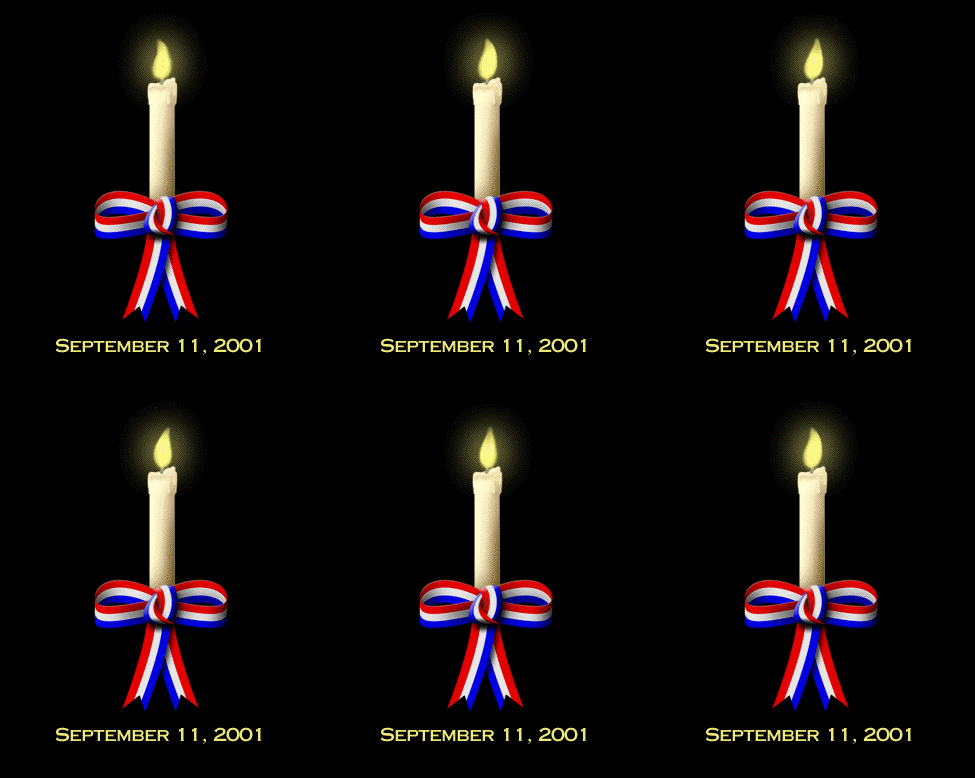
Today is 9/11, the anniversary of an incredibly tragic day. I remember the day vividly. I was teaching my high school chemistry class when I found out about the twin towers. There were two students in class with parents working in NYC and one student with grandparents flying in from Boston that day. I remember how my oldest daughter could not comprehend that this was an intentional act, and not an accident. I remember my youngest daughter thinking the plane hit her preschool building and was frightened to go back. And I remember crying for weeks as images were displayed on television and in newspapers of the devastation felt by so many.
But as we reflect on that day, I implore us all to do so with both compassionate hearts and critical minds. Let us take more from this tragedy than a feeling of sorrow and/or pride; our children deserve better. Let us teach our kids that we are a part of a global community and we have a responsibility to that end. Let us better understand history and our role in its creation. Let us recognize what America does well and what we can improve upon and strive to do so. No one should have to live with the devastation both violence and hatred cause, no matter where they live. So let us let our individual and collective behavior reflect that belief.
The greatest tragedy that could come from remembering 9/11, or similar types of anniversaries, is to reflect on them with a narrow lens, afraid to confront what might be hidden or out of view. There's always something constructive we can learn from these profound historical moments. Looking willingly and courageously at the larger, more complicated context, we can learn how to better contribute to our global community. And we can, indeed, show our children how to leave this world a more peaceful, unified place than we found it.
Educators. Students. Community members. Much more unites us than divides us, particularly knowing we all wear multiple hats. Building relationships. Thinking BIG.
Challenging and supporting one another. Developing engaged, empathetic citizens. And foundational working towards racial equity. Please join me in pondering how best to nurture these common ground connections.
Saturday, September 11, 2010
Thursday, July 8, 2010
Inspirational Summer Reading!
Just finished reading an inspiring book, given to me by a friend/colleague, entitled Faust in Copenhagen. Written by theoretical physicist Gino Segré, the book beautifully describes the fascinating story of the discussions responsible for the discovery of atomic structure and quantum mechanics in the early 1900s. The most amazing part of the book is the focus on the human side of science.
Yes, contrary to popular belief, scientists are in fact human! In Faust in Copenhagen, Segré describes the lives of seven (plus) scientists as they communicate and brainstorm with one another in magical ways, pondering the mysteries of physics. Picturing a group of seven musicians or poets or artists or writers discussing their subject seems so "normal," but the same image using scientists (or mathematicians) conjures up a very different mental picture, for some reason. After reading this book, however, you would be hard-pressed to decide in which profession these six men and one woman belong. They are theoretical and experimental physicists, to be certain. But they are incredibly zealous and articulate in their area of expertise, discussing the intricacies of that which excites and intellectually stimulates them with as much passion as a poet, as much rhythm as a musician, as much symbolism as a writer, and as much abstract thought as an artist. The description of their conversation makes me long to be in school again, having scholarly discussions with peers and professors on a regular basis about science and its relevance in our lives.
Faust in Copenhagen was inspirational for me as someone who enjoys science. But having just finished The Element, by Ken Robinson, I value it just as much from a teacher's perspective. Sir Robinson describes the phenomenal potential that exists when you find your element—the place where the things we love to do and the things we are good at come together. These seven scientists certainly all allowed themselves the chance to follow this path. Because of this, they became the most influential physical scientists of the 20th century. Because they were allowed to follow their gift and passion, they literally changed the world. They actively worked at creating a progressive and constructive scientific community, led primarily by the outstanding teaching efforts of Niels Bohr. He did not allow politics, economics, or even personality conflicts get in the way of the progression of science. And Bohr sincerely cared about each scientist as a person, student, friend, helping out with whatever was needed in whatever manner he could.
I have so much more spinning in my head in terms of the connection I made between these two books. Community-building and discussion documentation and technology and personal connections, etc. For now, I look forward to using these books as a foundation in my classroom this school year, trying my best to emulate the likes of Bohr and the ideas of Robinson. A true challenge, certainly not attainable, but I sincerely look forward to trying!
Yes, contrary to popular belief, scientists are in fact human! In Faust in Copenhagen, Segré describes the lives of seven (plus) scientists as they communicate and brainstorm with one another in magical ways, pondering the mysteries of physics. Picturing a group of seven musicians or poets or artists or writers discussing their subject seems so "normal," but the same image using scientists (or mathematicians) conjures up a very different mental picture, for some reason. After reading this book, however, you would be hard-pressed to decide in which profession these six men and one woman belong. They are theoretical and experimental physicists, to be certain. But they are incredibly zealous and articulate in their area of expertise, discussing the intricacies of that which excites and intellectually stimulates them with as much passion as a poet, as much rhythm as a musician, as much symbolism as a writer, and as much abstract thought as an artist. The description of their conversation makes me long to be in school again, having scholarly discussions with peers and professors on a regular basis about science and its relevance in our lives.
Faust in Copenhagen was inspirational for me as someone who enjoys science. But having just finished The Element, by Ken Robinson, I value it just as much from a teacher's perspective. Sir Robinson describes the phenomenal potential that exists when you find your element—the place where the things we love to do and the things we are good at come together. These seven scientists certainly all allowed themselves the chance to follow this path. Because of this, they became the most influential physical scientists of the 20th century. Because they were allowed to follow their gift and passion, they literally changed the world. They actively worked at creating a progressive and constructive scientific community, led primarily by the outstanding teaching efforts of Niels Bohr. He did not allow politics, economics, or even personality conflicts get in the way of the progression of science. And Bohr sincerely cared about each scientist as a person, student, friend, helping out with whatever was needed in whatever manner he could.
I have so much more spinning in my head in terms of the connection I made between these two books. Community-building and discussion documentation and technology and personal connections, etc. For now, I look forward to using these books as a foundation in my classroom this school year, trying my best to emulate the likes of Bohr and the ideas of Robinson. A true challenge, certainly not attainable, but I sincerely look forward to trying!
Wednesday, June 2, 2010
Building an Ecology of Freedom—The Importance of Fair Use
It has been ages since I've published a new post. Suffice it to say, other, more important life events have required me to revert back into some old, instinctual teaching habits the last couple months. And I have felt terribly absent as a contributing member of my PLN. But, I have continued to devour the ideas being shared and thought now was as good a time as any to get back into the groove!
I just watched Lawrence Lessig's TedxNYED talk entitled Re-examining the Remix. I thought it was quite compelling. I believe I was particularly drawn to this talk for two reasons.
1) I am intrigued by the notion of "Building an Ecology of Freedom." Developing a constructive community is the foundation of my classroom, and in doing so, my students and I practice and investigate dozens of methods of social interactions. This includes "remixing" as a form of personal expression. Lessig showed a video of Julian Sanchez stating, "Copyright policy isn't just about how to incentivize the production of a certain kind of artistic commodity; it's about what level of control we're going to permit to be exercised over our social realities." This got me thinking about how important and relevant "fair use," the freedom to create and remix, is to my teaching practice. And my head is still spinning.
2) I believe I'm also drawn to this topic for personal reasons. My husband, Spiro Bolos, works quite extensively on copyright and fair use, presenting at regional and national conferences, including CUE this past spring. I happen to find his explanations and stories exceptionally relevant to the teaching community as a whole. He not only quotes Lessig (I believe), but is working with Renee Hobbes this summer, as well. (Here is a version of his presentation.) Having heard Spiro's talks, I was quite surprised at Lessig's angle of describing the conservative politicians to be the Fair Use Crusaders. I don't know why; I guess I assumed that since I agreed with my husband's thoughts, and Lessig's, that liberals would be crowned with that title. Live and learn! (But I'm certainly interested in hearing other experts' opinions. Do most agree with Lessig's perspective?)
I found the following statements from Lessig's talk to be incredibly important as the fight to "Build an Ecology of Freedom" continues, regardless of who is leading the charge.
"Freedom needs this opportunity to have BOTH the commercial success of the great creative works AND the opportunity to build this (ecology of freedom) type of culture. And for that to happen you need ideas like fair use to be central and protected…"
"Walt Disney was a remixer extrataordinaire."
"Our lives are sharing activites. And for sharing to exist, we need well-protected spaces of fair use."
"The ecology of sharing needs freedom from within to create. And we need to respect the creator."
I would have to work exceptionally hard to even be considered a novice in understanding Fair Use. But I am developing a greater appreciation for the social and professional necessity of learning about it, and fighting for it. So, do I vote Republican in November? ;-)
Monday, April 5, 2010
"Childish" Dreams...We Adults Should Be So Smart!
Adora Svitak shares her "childish" dreams...and they have inspired me today. She's twelve and definitely worth a listen. Not only should educators think differently about the expectations we have for our students ("standards" are NOT the answer...), but we should rethink our expectations for ourselves. If we continue to talk about why we CAN'T do something, or have conversations about check-list items like NCLB or RTI, we're destined to harm our students' growth, and our own. We need to feel free to be new and creative with our ideas...We need to talk and brainstorm together. Unstructured, creative time. The ideas are spinning...! Thanks, Adora!
Subscribe to:
Posts (Atom)


